Parametric design is a superpower
There is a moment every computational designer remembers: the first time you change one number and a whole façade redraws itself. That’s the moment you stop pushing individual points and curves and start describing geometry as logic. Define a rule once, and the model takes care of the rest.
That way of thinking is becoming a literacy. The studios and engineering teams that move fastest are the ones who can describe their intent as a system instead of redrawing it by hand every time the brief changes. For a designer today, thinking in rules, dependencies and variations is becoming as fundamental as writing is to anyone else.
But the wall is brutal
Here’s the problem: almost nobody gets to that moment.
Grasshopper, the tool where most people first meet parametric design, is famous for the steepest learning curve in the field. A first canvas is intimidating - hundreds of cryptically named components, a tangle of wires, and red error states nobody explains. Students spend their first weeks not designing anything at all. They copy node layouts from a tutorial, hope the colors stay green, and quietly decide that ‘parametric stuff’ is not for them.
The real bottleneck in design education was never talent or motivation. It was always the on-ramp: too steep, too lonely, too slow.
A tutor that lives in the canvas
That’s the part we can finally change. With Ask Mode, a student can point at any part of a Grasshopper definition and simply ask. What does this component do? Why is this component red? How do I make this pattern repeat along a curve instead of a line? Raven answers in plain language, grounded in the actual definition on the screen - not a generic tutorial written for someone else’s problem.
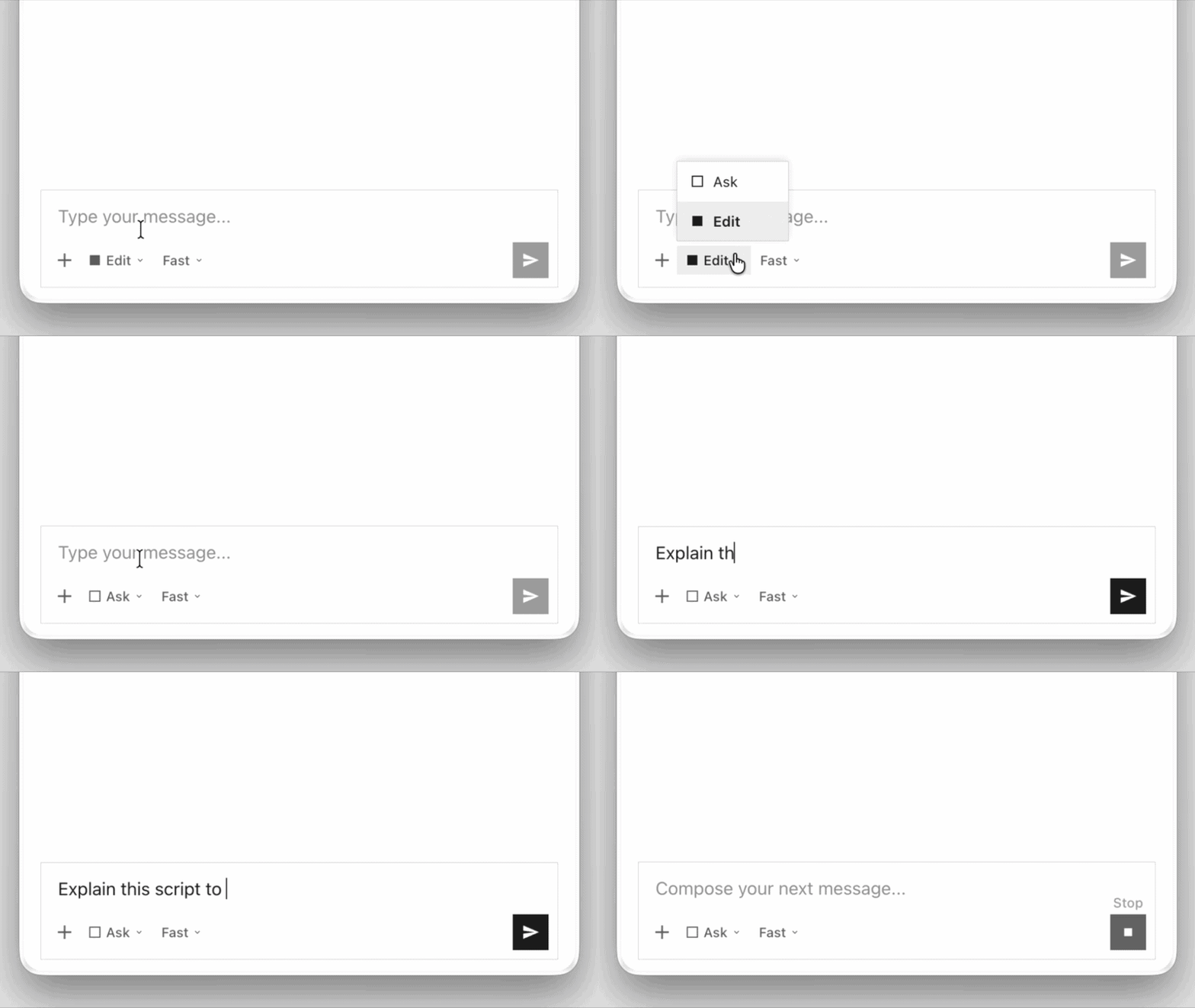
The difference matters. A video shows you which buttons to press. Ask Mode explains the why behind each step, so the logic transfers to the next problem instead of evaporating the moment the tutorial ends. And it all happens inside the real professional tool - Rhino and Grasshopper, with live preview and the full ecosystem of plugins - not a classroom sandbox students have to unlearn later.
For the educator, the best part is what leaves their plate. When the tool can explain itself, you stop being a Grasshopper help desk and go back to teaching design: form, structure, intent. The conversations a tutor in a canvas cannot have for you.
One computational expert in every seat
Our vision for Raven is simple: one computational expert in every seat. Today only a small fraction of designers on any team can write Grasshopper, and that bottleneck starts in the classroom.
Closing it does not mean replacing the educator or the craft. It means lowering the wall, so that far more students reach the interesting part - designing - instead of giving up at the first red wire.
Raven is free for students, and we love working with universities to bring it into the classroom. If you teach parametric design, let’s build the next generation of computational designers together.